Florence’s best museum might be the Duomo’s backstage
The Museo dell’Opera del Duomo reveals how Florence’s cathedral complex was designed, built and transformed, with original masterpieces gathered just behind Piazza del Duomo.
Why this museum feels like Florence’s backstage
In Florence, it is easy to be pulled straight toward the biggest-name museums. Yet just behind the crowds of Piazza del Duomo, the Museo dell’Opera del Duomo offers something rarer: not simply a parade of masterpieces, but the working memory of the city’s most famous skyline. This is the museum of the institution that has cared for the cathedral complex of Santa Maria del Fiore for centuries, and that focus changes the experience completely.
Instead of treating sculpture, architecture and devotion as separate stories, the museum reunites them. Many of the works here were created for the Cathedral, Baptistery and Bell Tower outside. Seeing them indoors, at close range and in context, makes Florence’s Duomo complex read less like a postcard and more like a long, ambitious civic project shaped by artists, guilds, engineers and worshippers.
The setting matters too. The museum occupies spaces once used for the Opera del Duomo’s offices and workshops, and the institution notes that these were the areas where Filippo Brunelleschi had his headquarters and where Michelangelo carved the David originally intended for one of the dome’s exterior buttresses. That alone gives the place the feeling of a backstage pass to Florence’s best-known monument.
What makes the Museo dell’Opera del Duomo special
The museum is substantial rather than supplemental. According to the Opera di Santa Maria del Fiore, it extends across more than 6,000 square metres, arranged in 28 rooms over three floors. It was founded in 1891 and underwent a major renovation completed in 2015. This is not a side gallery to squeeze in after climbing the dome; it is one of the main ways to understand why Piazza del Duomo became such a defining place in Florence.
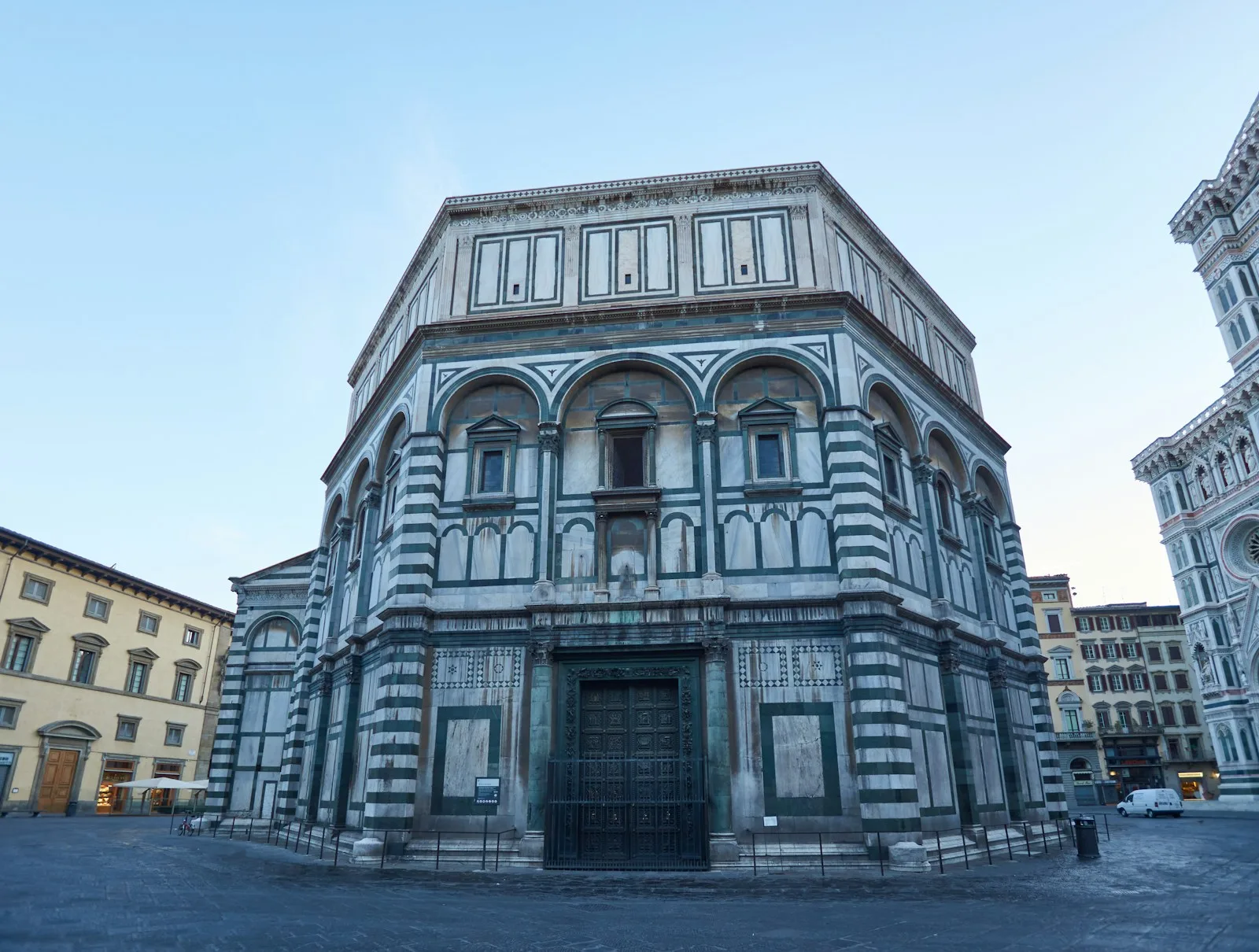
Its real strength is that it preserves original works made for the monuments outside. In a city where so much art has been moved, restored or fragmented by time, the museum’s curatorial idea is unusually clear: bring together the sculptures, panels and architectural elements that once belonged to the cathedral complex, and present them in relation to the buildings they were designed for.
That makes the museum especially rewarding in Florence, where the Historic Centre is recognized by UNESCO for the extraordinary concentration of art tied to the city’s rise in the Middle Ages and Renaissance. The Duomo is part of that bigger urban story, but the museum lets you slow it down and examine the pieces that the square itself can no longer show in their original form.
The room you will remember: the Hall of Paradise
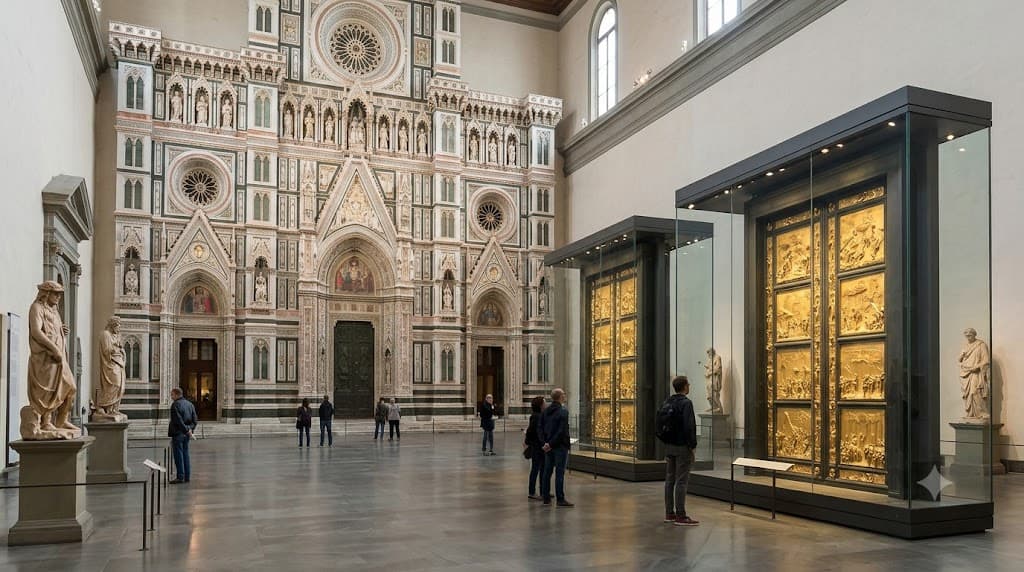
If one space justifies the visit on its own, it is the Sala del Paradiso, or Hall of Paradise. The museum designed this vast room to evoke the historic space between the Baptistery and the Cathedral, once called the “Paradise” of Florence. Here, the first facade of Santa Maria del Fiore has been reconstructed based on a period drawing, allowing many statues made for it to be set back into positions that suggest how the church once addressed the piazza.
This is where the museum stops feeling like storage and starts feeling theatrical in the best sense. The facade reconstruction faces the Baptistery doors, recreating the visual dialogue that once unfolded in the square among cathedral sculpture, bronze portals and older fragments from the city’s past. For a visitor, it becomes much easier to grasp that medieval and Renaissance Florence was designed as an urban conversation, not as isolated monuments.
The hall also holds Lorenzo Ghiberti’s famous Gates of Paradise, the gilded bronze doors made for the Baptistery between 1425 and 1452. Their ten panels tell Old Testament stories, and the simplified format allowed Ghiberti to experiment with perspective and complex narrative scenes. Seeing these doors indoors, rather than at a distance in the piazza, is one of the museum’s great privileges.
Masterpieces that hit harder indoors
Florence has no shortage of famous names, but in this museum they are connected to a very specific place. Donatello’s Penitent Magdalene is among the most affecting works in the collection. The museum identifies the wooden sculpture as a work from around 1455, probably made for the Baptistery, where it remained from the late fifteenth century until 1996. Its gaunt physicality and inward stillness make it feel startlingly modern.
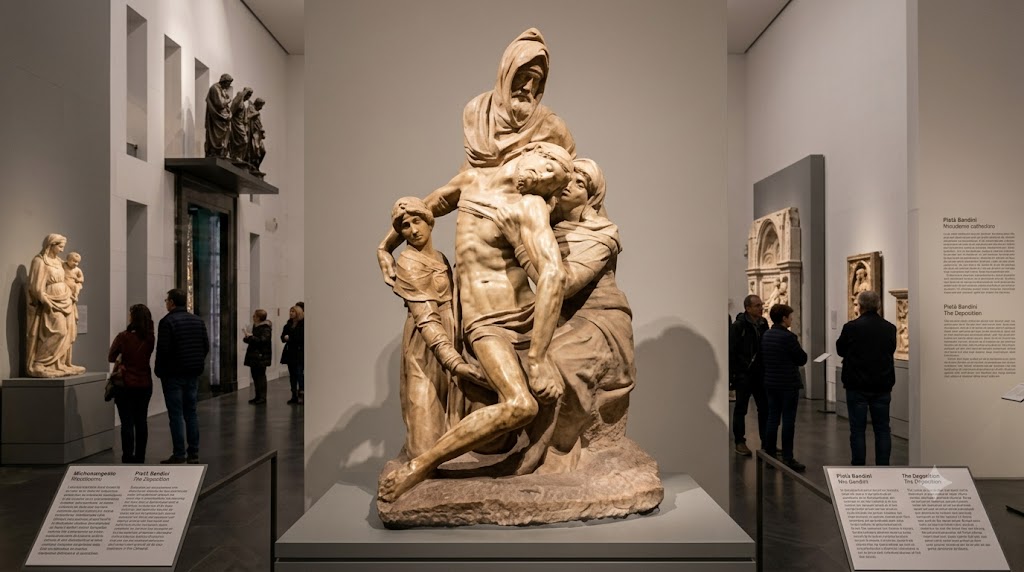
Another essential stop is Michelangelo’s Pietà Bandini, displayed in the Tribuna di Michelangelo. The museum describes it as Michelangelo’s second-last sculpture, begun around 1547 to 1549 and later abandoned after he damaged it in frustration over flaws in the marble. It was eventually restored and transferred to the Duomo in 1722, where it stood opposite the high altar before moving into the museum. The standing figure of Nicodemus is understood as a self-portrait of the elderly Michelangelo.
Because these works are shown as part of the Duomo’s wider story, they do not feel like isolated trophies. They feel rooted in Florence: commissioned, displayed, moved, repurposed and preserved by the same civic-religious ecosystem that shaped the square outside.
How to visit well in Florence
The museum sits within the monumental complex of Piazza del Duomo, so it works best as part of a wider Florence day rather than as a completely separate stop. The Opera di Santa Maria del Fiore sells access through passes that combine the museum with other monuments in the complex. The most comprehensive is the Brunelleschi Pass, which includes the Dome, Giotto’s Bell Tower, the Baptistery, the Museo dell’Opera del Duomo and Santa Reparata. There are also passes that exclude the Dome.
For many travellers, the smartest strategy is to begin with the museum before climbing anything. The galleries give you the visual vocabulary for what you will later see outside on the Cathedral, the Bell Tower and the Baptistery. Afterward, details in the piazza stop blurring into one grand facade and start becoming legible: sculptural programs, reused spaces, restored surfaces and the different roles of each building.
The official site lists the museum as open daily from 8:30 AM to 7:00 PM, with closure on the first Tuesday of the month. It also notes that the museum is accessible for visitors with mobility difficulties and includes the TouchAble path. Since access rules and bundled passes can change, it is best to plan directly through the Opera di Santa Maria del Fiore’s official channels before your Florence visit.
Who will appreciate it most
This museum is ideal for travellers who like Florence best when it becomes more specific. If you want the city’s greatest hits only, you may spend your time racing between the Uffizi, Accademia and a dome climb. But if you want to understand how Florence built its identity in stone, bronze and ritual space, the Museo dell’Opera del Duomo is one of the city’s richest stops.
It suits first-time visitors who feel overwhelmed by Piazza del Duomo, because it explains what they are looking at. It also rewards repeat visitors who think they already know Florence. Many people have stood under Brunelleschi’s dome; fewer have studied the original sculptures, doors and facade fragments that reveal how contested, collaborative and changeable the cathedral complex really was.
Most of all, it is for anyone who enjoys museums that reveal process instead of just prestige. In Florence, that makes this place feel unexpectedly fresh.
The verdict
If Florence’s best museum is supposed to combine art, place and historical insight, the Museo dell’Opera del Duomo has a serious claim. It gathers major works by Michelangelo, Donatello and Ghiberti, but its deeper achievement is showing how those works belonged to a living urban ensemble centred on Piazza del Duomo.
That is why calling it the Duomo’s backstage feels right. Backstage is where plans were drawn, pieces were made, changes were absorbed and meanings accumulated. In a city famous for masterpieces, this museum lets you see the machinery behind them. And in Florence, understanding the Duomo is one of the best ways to understand the city itself.
Was this travel report helpful for your journey?
Let our editorial desk know how this coverage assisted your plans.